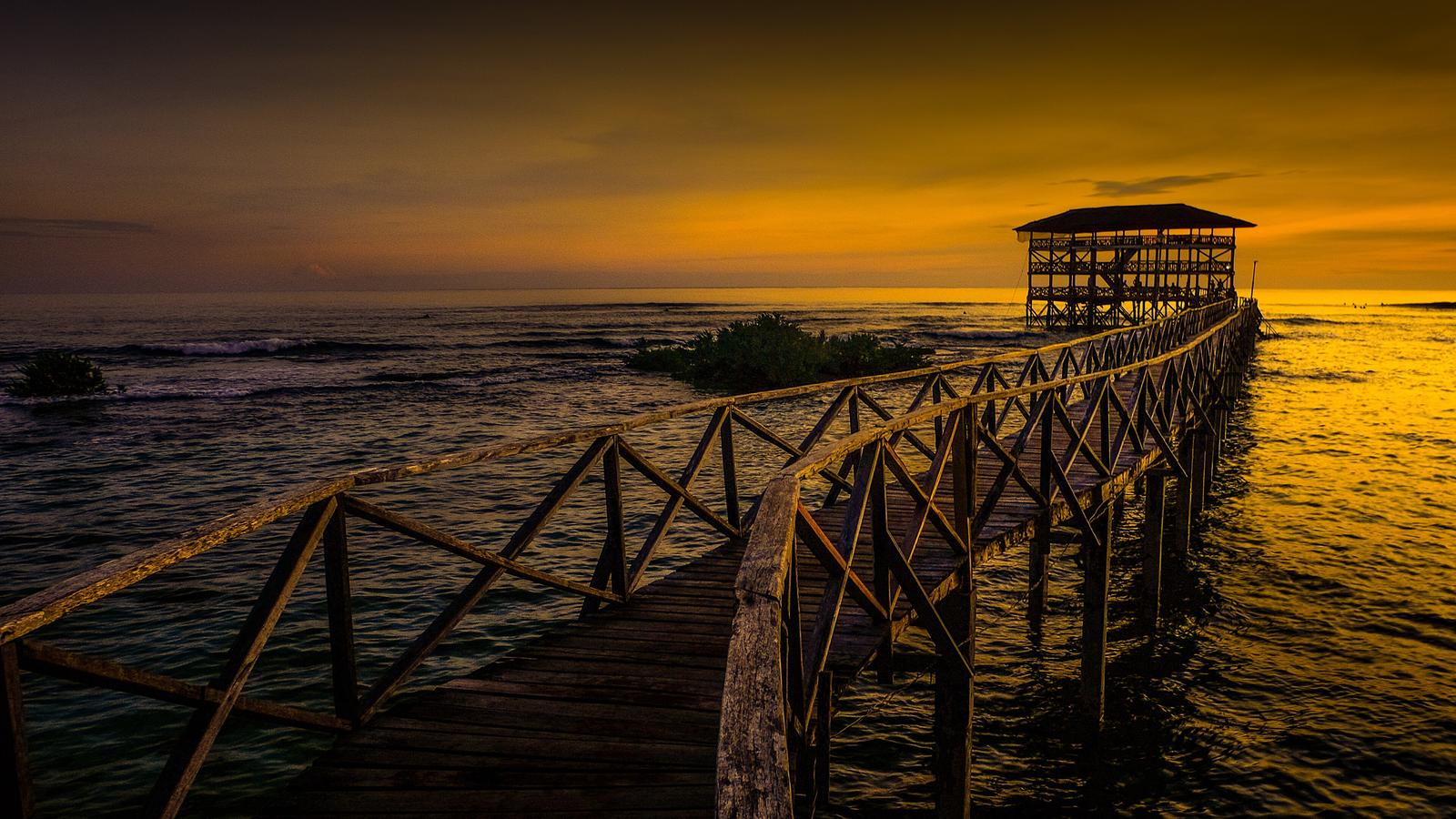
If you have a foreign partner, a client abroad or an expat friend, you have probably been asked this already. They read that the Philippines now has a digital nomad visa, they picture a month in Siargao with a laptop, and they want to know where to apply.
The honest answer, as of 11 October 2026: nowhere, yet. The law exists. The application form doesn’t.
The Philippines digital nomad visa was created by Executive Order No. 86, signed on 24 April 2025. Nearly eighteen months later, most guides online still contradict themselves, calling the visa “fully operational” in one paragraph and admitting the fee and income rule are unknown in the next. This guide is for Filipinos who keep getting asked about it, for Fil-Ams and former Filipinos thinking of working from home for a year, and for foreign partners and friends planning a long stay here. We go through what the order actually says, line by line, what is still missing, who can realistically qualify, and what people do instead while the Department of Foreign Affairs (DFA) finishes the job.
A few links in this guide are affiliate links. If you buy through them we may earn a small commission at no extra cost to you, and we only link what we would use ourselves.
This is general information, not legal or immigration advice. Rules change, so confirm your own case with the DFA, the Bureau of Immigration or a licensed immigration lawyer before you act on it.
Philippines digital nomad visa: the short answer
Here is where things stand as of 11 October 2026, checked against government sources on that date.
- Legal basis: Executive Order No. 86, s. 2025, signed by President Marcos on 24 April 2025.
- Who it is for: foreigners aged 18 and up who work remotely for employers or clients outside the Philippines.
- How long: a stay of up to one year, renewable for the same duration.
- Can you apply online? No. The DFA e-Visa portal (evisa.gov.ph) lists only the 9(a) temporary visitor categories. There is no digital nomad option.
- Implementing guidelines: the order gave the DFA 30 days to issue them. We could not find any published guidelines on the DFA, Official Gazette or e-Visa sites.
- Income requirement: “sufficient income” earned outside the Philippines. The order sets no amount.
- Fee: none published.
- Eligible countries: only nationals of countries that offer a nomad visa to Filipinos. No official list has been published.
- Do Filipinos need it? No. It is a visa for foreigners. Filipino citizens, including dual citizens, simply come home.
If you only read one line: the Philippines has authorized a digital nomad visa, but as of this check there is no public way to apply for it.
What EO 86 actually says, condition by condition
The order is short. Section 1 lets the DFA issue a Digital Nomad Visa (DNV) to non-immigrant foreigners who want to enter and stay temporarily “for the purpose of working remotely using digital technologies”, where their clients or employers are outside the Philippines. Section 2 lists eight conditions. The DFA’s own embassy in The Hague publishes the same eight conditions on its DNV page, word for word, which is the closest thing to an official checklist right now.
| Condition in Section 2 | What the order says | What is still unknown |
|---|---|---|
| Age | At least 18 | Nothing |
| Remote work | Proof of remote work using digital technology | Which documents count |
| Income | Proof of sufficient income generated outside the Philippines | The amount |
| Criminal record | Proof of no criminal record | Whether it must be apostilled, and from which country |
| Health insurance | Valid for the whole period of the DNV | Minimum cover |
| Nationality | National of a country that offers DNVs to Filipinos and where the Philippines has a Foreign Service Post | The list of countries |
| Security | Must not pose a threat to the internal or external security of the Philippines | Nothing |
| Local work | Must not be employed in the Philippines | Nothing |
Section 3 says a DNV holder may stay up to one year and may renew for the same duration. Section 4 tells the DFA to set the grounds for revoking a DNV, and says those grounds must include, among others, taking a local job, fraud or misrepresentation in the application, and breaking immigration law. Section 5 puts the DFA in charge, working with the Department of Justice, the Department of Tourism, the Bureau of Immigration and the Bureau of Internal Revenue, and orders a pilot within 60 days. Section 7 orders implementing guidelines within 30 days.
That is it. No fee, no income figure, no form, no processing time.
The USD 24,000 figure and other things the order never said
Search “Philippines digital nomad visa requirements” and you will see USD 24,000 a year everywhere. It is not in EO 86. Trace it back and it leads to consultancies and nomad websites, never to a DFA notice. At the BSP reference rate of PHP 62.90 to the dollar (9 October 2026), that is about PHP 1.51 million a year, or PHP 125,800 a month, and nobody official has said it.
Several other “facts” travel with it:
- Fees of USD 200 to 300, or PHP 3,000 to 5,000. Not published by the DFA.
- Tax-free foreign income. EO 86 contains no tax exemption. The BIR is only named as one of the agencies helping to design the program.
- Multiple entry. Section 3 says holders “may be granted entry privileges” while the visa is valid. Most coverage reads that as multiple entry. The order does not actually use the word.
- Spouse and children. The order does not mention dependents at all.
- Processing in 2 to 6 weeks. There is no process to time.
None of this means those figures will turn out wrong. It means nobody can quote them as the rule yet. When the guidelines do appear, the income figure and the fee will be the first things to check, and we will update this post with the DFA’s own numbers.
If someone offers to “process” a Philippine DNV for a fee today, ask them which DFA circular they are filing under. There isn’t one we can find.
The reciprocity rule: who can qualify, and why most Americans can’t
This is the part almost every guide skips, and it is the most Filipino part of the whole order.
Section 2(f) says the applicant “must be a national of a country that offers DNVs to Filipinos”. So whether a foreigner can get the Philippine nomad visa depends on how their own country treats Philippine passport holders. The DFA has not published a list. But we already track which nomad visas Filipinos can actually get, so the mirror image is easy to sketch.
Countries whose nomad or remote-work visas were open to Philippine passports in our September 2026 check: Thailand (DTV), South Korea, Spain, Portugal, Hungary, Croatia, Estonia, Malta, the UAE, Malaysia (DE Rantau), Indonesia and Colombia. Taiwan’s Gold Card is also open to Filipinos, but it is an open work permit rather than a nomad visa, so we leave it off. Our full breakdown, with income rules in pesos, is in our guide to the digital nomad visas Filipinos can actually get.
Countries that, on a strict reading, fail the test:
- The United States, the United Kingdom, Canada and Australia have no national digital nomad visa at all. On the plain wording, their citizens cannot qualify.
- Japan has a nomad visa, but only for nationals of countries that are both visa-exempt for Japan and have a tax treaty with it. The Philippines is not visa-exempt, so Japan does not “offer DNVs to Filipinos” either.
- Czechia and Turkey run nomad visas limited to named nationalities, and the Philippines is not on either list.

So the people most likely to ask you about it, an American boyfriend or an Australian boss, are the ones the order shuts out. Whether the DFA reads Section 2(f) that strictly is exactly what the missing guidelines should settle. Until then, treat this list as our reading, not an official one.
The Foreign Service Post part is softer than it looks. The last paragraph of Section 2 says a national of a qualifying country with no Philippine embassy or consulate may apply in the nearest country that has one, subject to the guidelines.
Why you can’t apply yet
The deadlines in the order passed long ago. EO 86 takes effect on publication, and gave 30 days for guidelines and 60 days for a pilot. Both windows closed in mid-2025.
Here is what we checked on 11 October 2026:
- The DFA e-Visa portal. Its visa policy page lists 9(a) temporary visitor visas for business, tourism, medical treatment, yachting, filmmaking, journalism, athletics and performing arts, and “other purposes”. No DNV.
- The DFA and its embassies. The Hague embassy page lists the eight conditions and nothing else: no form, no fee, no steps.
- The Official Gazette. EO 86 itself, but no implementing guidelines.
Other reports disagree. A July 2026 column in the Daily Tribune said the DFA “began accepting applications” after the order took effect. Nomad visa trackers that checked in September 2026 found no working channel. We could not confirm either way from a primary source, so here is the practical test: email the Philippine embassy or consulate that covers your country and ask, in writing, whether it is accepting DNV applications and on which form. A written yes from a Foreign Service Post beats any blog, including this one.
Our first look at this visa was written before the order was even signed, and our earlier guide shows how much has stayed the same since.
What foreign remote workers do in the meantime
Without a DNV, long-staying foreigners use the routes that already work.

The visa-free entry plus extensions route. Nationals of visa-free countries get an initial 30 days on arrival, according to the Bureau of Immigration. They can extend at any BI office or through BI e-services online. DFA posts describing the BI’s Long-Stay Visitor Visa Extension say a stay can be extended in blocks of up to six months, to a maximum of 36 months in total for visa-free nationals and 24 months for nationals who need a visa. Stays past 59 days also need an ACR I-Card, which we explain in our guide to getting an ACR I-Card in the Philippines.
One honest caveat. A tourist stay is not a work status, and we could not find any BI guidance saying remote work for a foreign employer is fine on one. Plenty of foreigners do it quietly. The DNV was created to close that gray area, which is why its delay matters.
The balikbayan route, for Fil-Ams, OFWs and former Filipinos. Under Republic Act 6768 as amended by RA 9174, a balikbayan is a Filipino citizen who has lived abroad continuously for at least a year, an OFW, or a former Filipino naturalized abroad. A former Filipino gets a one-year visa-free stay on arrival, unless they hold the passport of a restricted nationality. The foreign spouse and children of any balikbayan get the same one-year stay, as long as they travel together with the balikbayan. Bring an old Philippine passport or PSA birth certificate, plus the marriage or birth certificate for family members. For most of our US readers, this already beats the DNV: one year, no application, no fee. We cover the details in our guide to the one-year visa-free balikbayan stay for foreign spouses and children.
Dual citizenship. A former Filipino who reacquires citizenship under RA 9225 is simply Filipino again, with no stay limit and no visa question at all.
Real costs in PHP
Since the DNV has no published fee, the real numbers today belong to the tourist and balikbayan routes. Conversions use the BSP reference rate of PHP 62.90 to USD 1 on 9 October 2026.
| Item | Cost | Source and status |
|---|---|---|
| Philippine DNV application | Not published | EO 86 sets no fee |
| DNV income requirement | Not published | The USD 24,000 (about PHP 1.51 million a year) figure is unofficial |
| First 30 days, visa-free nationals | Free | Bureau of Immigration |
| Six-month extension (LSVVE), visa-free nationals | About PHP 11,600 | Listed on DFA embassy pages. Check the current fee when you file, the BI may have changed it |
| ACR I-Card, for stays past 59 days | About PHP 3,100 (ACR PHP 1,010 plus I-Card PHP 2,100) | Listed on DFA embassy pages; the I-Card part moves with the exchange rate. Check the current fee when you file |
| Balikbayan stay, first year | Free | RA 9174 |
| Health insurance | Varies by age and cover | Required for the DNV, wise for everyone |
Health cover is the one cost that is certain either way. The DNV requires insurance valid for the whole stay, and a long tourist stay without it is a gamble with Philippine hospital deposits. SafetyWing’s Nomad Insurance is one option, because it renews month to month.
See what SafetyWing Nomad Insurance costs for your stay
Where foreign remote workers actually base themselves
Long-stay foreigners tend to split time between a city with reliable fiber and a beach town. Cebu IT Park and BGC in Taguig have the coworking spaces and backup power. Siargao and La Union have the surf and the community, with more brownouts and slower internet. Budget for a backup connection anywhere outside Metro Manila and Metro Cebu, and remember that typhoon season runs roughly June to November.

For La Union, San Juan is the base, with surf camps and coworking cafes along the national highway. You can compare places to stay in San Juan, La Union before you commit to a month.
For Siargao, most remote workers stay around General Luna, close to Cloud 9. The map below shows current places to stay there, with prices in pesos.
A local SIM from Globe or Smart is cheap once you are here, but an eSIM means you land already connected for the airport transfer and the first client call. Check Airalo’s Philippines eSIM plans before you fly.
Common mistakes and red flags
- Paying an agent to “file” a DNV. Until the DFA publishes guidelines and a form, there is nothing to file. Ask any agent for the circular number.
- Planning a budget around USD 24,000. It might end up close. It might not. Don’t treat it as the rule.
- Assuming an American partner qualifies. On the order’s own wording, US, UK, Canadian and Australian citizens don’t.
- Overstaying while waiting for the DNV. Extensions are cheap compared with overstay fines and a possible blacklist. File before your stay runs out.
- Thinking Filipinos need it. A Philippine passport holder, or a dual citizen under RA 9225, never needs a visa to live and work remotely at home. If that is you, our step-by-step plan on how to become a digital nomad from the Philippines is the better read.
FAQ
Is the Philippines digital nomad visa open for applications?
Not that we can confirm. As of 11 October 2026 it is not on the DFA e-Visa portal, and we found no published implementing guidelines.
How much income do you need for the Philippines digital nomad visa?
EO 86 says only “sufficient income” earned outside the Philippines. The widely quoted USD 24,000 a year is unofficial.
How long is the Philippines digital nomad visa valid?
Up to one year, renewable for the same duration, under Section 3 of EO 86.
Can Filipinos apply for the Philippines digital nomad visa?
No, and they don’t need to. It is for foreign nationals. Filipino citizens and dual citizens live and work in the Philippines without a visa.
Can Americans get the Philippines digital nomad visa?
On a strict reading, no, because the US offers no digital nomad visa to Filipinos. The DFA has not confirmed how it will apply the rule.
Can a digital nomad visa holder work for a Philippine company?
No. Section 4 says the grounds for revocation must include local employment.
My foreign husband works remotely. What should he use?
If you have lived abroad continuously for at least a year, are an OFW, or are a former Filipino, he can enter together with you under the balikbayan privilege for a one-year visa-free stay, as long as he is not a restricted national. If you live in the Philippines already, the balikbayan rule does not apply, so visa-free entry plus BI extensions is the usual route.
The bottom line
The Philippines digital nomad visa is real on paper and missing in practice. Until the DFA publishes guidelines, a form and a fee, the useful routes are the old ones: visa-free entry with extensions, the balikbayan privilege for Filipinos abroad, former Filipinos and their families, or dual citizenship. If a foreign friend asks you about it this week, send them this post and tell them to email their nearest Philippine embassy for a written answer. We will update this guide with the official figures as soon as the DFA releases them.
About the Author
Bianca Rei is a Filipino traveler, entrepreneur, and problem-solver who has called Serbia home for many years. She has been following Two Monkeys Travel Group since 2014, back when she was simply a reader dreaming, traveling, and collecting stories of her own, so being able to contribute to the blog now feels a little like coming full circle.
Bianca runs Rodi Solutions, where she helps people and businesses navigate life and business in Serbia, alongside website design, development, and management. When she is not working, she is usually traveling, boxing, chasing another adventure, or spending time with her family.
Find her work at rodi.consulting, or get to know her beyond work at biancarei.net.