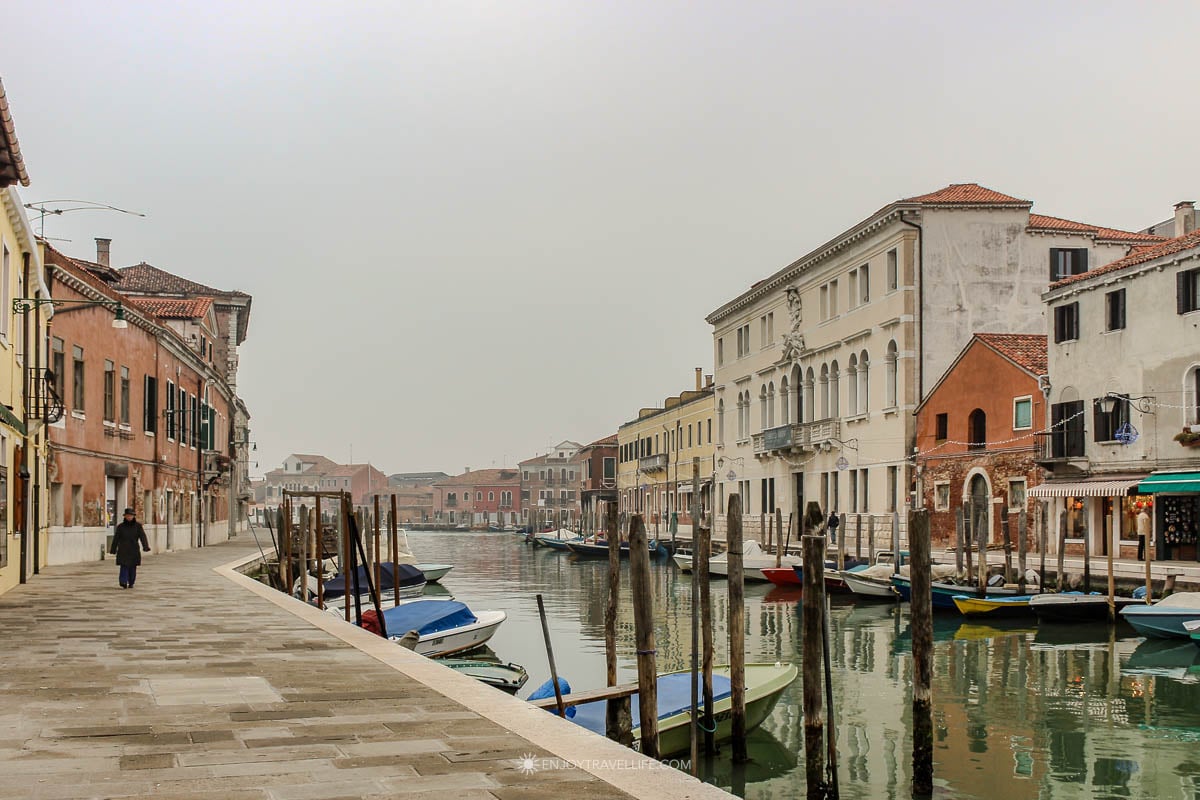
Most guides tell you to fold a trip to Murano and Burano from Venice into an easy half-day visit. They make it sound simple: hop on a vaporetto (water bus), watch some glassblowing, photograph the colorful houses, and be back in time for dinner.
It’s not that simple, especially if you are visiting during Carnival and your morning starts with a taxi strike.
I visited both islands in February and learned the hard way that timing is everything. If you want to know what to expect, what to budget, and how much time you actually need, keep reading.
This post may contain affiliate links. If you book or purchase through them, I may earn a small commission at no additional cost to you, so I can continue providing you with high-quality information to support your travel plans.
Where to Stay for a Murano and Burano Day Trip
If you’re planning a day trip to Murano and Burano, you will most likely be staying in Venice proper. The vaporetto to both islands departs from Fondamente Nove on Venice’s northern shore, about a 20-minute walk from St. Mark’s Square.
Planning more than a day trip? Use the interactive map below to browse accommodations near the Fondamente Nove departure point or across Venice. Properties in the Cannaregio district put you closest to the ferry terminal for an early start.
If you want to skip the day-trip logistics entirely, you can also stay on Murano itself. You’ll find a few boutique hotels and guesthouses on the island, and staying overnight means you get the glass workshops to yourself before the day-trippers arrive.
How to Get from Venice to Murano and Burano
You can reach both islands by vaporetto from the Fondamente Nove stop in Venice. The route is straightforward, but the schedule matters more than you might expect.
Here is how the route works.
| Detail | Murano | Burano |
|---|---|---|
| Vaporetto line | 3, 4.1, 4.2 | 12 (via Murano) |
| Travel time from Venice | ~10 minutes | ~40–45 minutes |
| Travel time Murano to Burano | N/A | ~30 minutes |
| Frequency | Every 10–20 minutes | Every 20–30 minutes |
| Key stop | Murano Colonna or Murano Faro | Burano |
Vaporetto tickets and passes (2026 prices):
- Single ticket: €9.50 (~$10.80): Valid for 75 minutes from first validation. Not enough time for a Murano and Burano day trip.
- 24-hour pass: €25 (~$28): Unlimited rides. This is what you want
- 48-hour pass: €35 (~$40)
- 72-hour pass: €45 (~$51)
A round trip to Murano and Burano requires at least four rides (€38 or ~$43 in single tickets). The 24-hour pass pays for itself on the first trip.
You can buy your 24-hour vaporetto pass online in advance, or in person at the ACTV ticket office or automated machines at the Fondamente Nove pier. Skip the resellers near St. Mark’s Square; the price is the same but the lines are shorter.
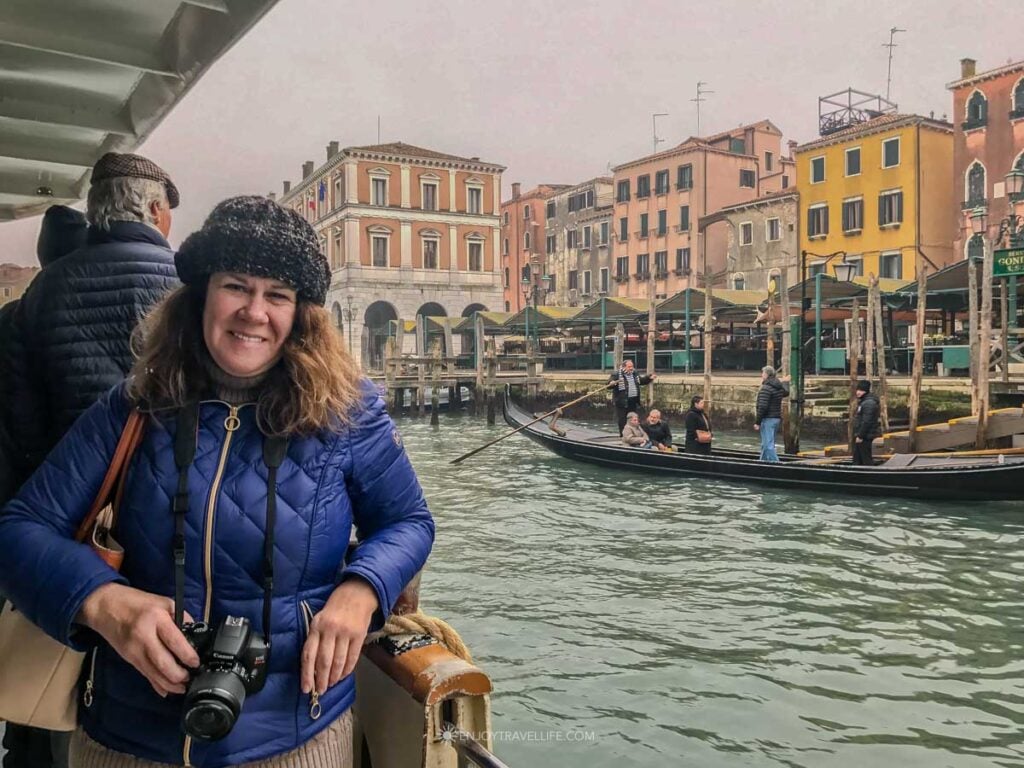
One thing you should know about the ferry ride: it is cold in February.
You can stay within the covered cabin area inside. It may be a bit crowded, and you’ll want to be outside to see the lagoon. So, dress in layers and bring a scarf or something to keep warm.
I bought a hand-knit hat from a vendor in Venice before boarding, and I was glad I did.
What You’ll See from the Vaporetto
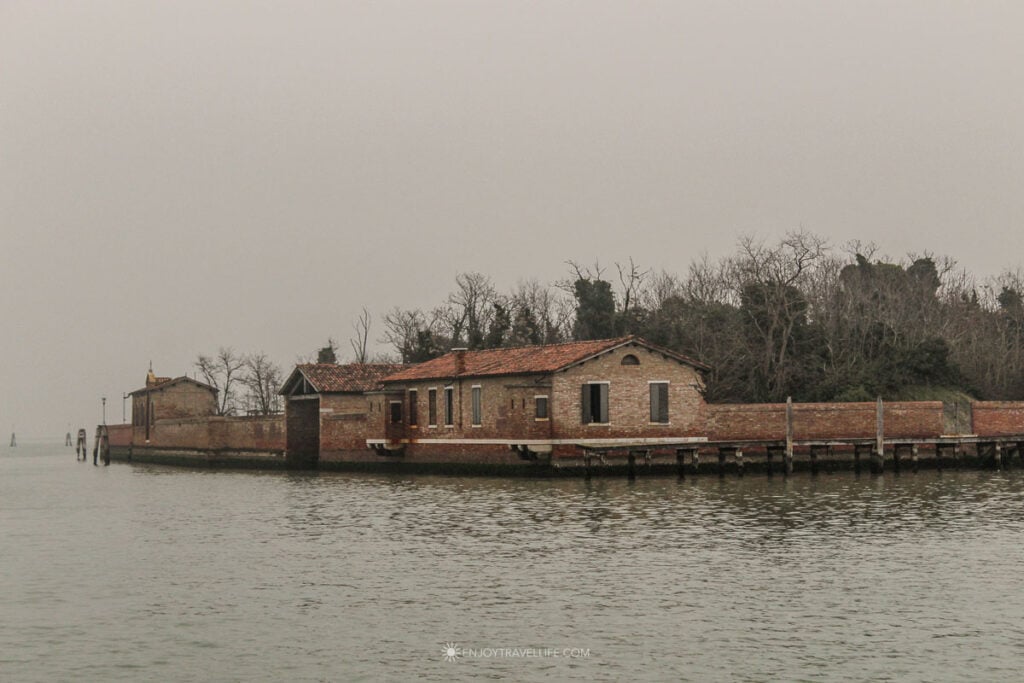
The ferry ride to Murano and Burano is part of the experience.
As you leave Venice, you’ll pass San Michele, the island cemetery where Venice has buried its dead since the early 1800s after Napoleon banned burials in the city.
From the water, it looks like a walled fortress floating in the mist. Stravinsky and Ezra Pound are buried there.
Between Murano and Burano, the lagoon opens up.
In February, the water and the sky blur into the same shade of gray. You’ll pass small islands with single buildings, wooden channel markers rising from the water, and the occasional working boat.
Out here, the lagoon feels like a working landscape rather than a tourist attraction. And on a February day, the moody skies added real atmosphere. For me, that was part of the appeal.
Murano: What to Expect
The Glass Factory Demonstration
Here’s something the guidebooks don’t always mention.
When you step off the vaporetto at Murano, you’re immediately funneled through an upscale glass factory. You walk into a workshop, watch a live glassblowing demonstration, and then exit through a showroom filled with museum-quality pieces at museum-level prices.
Often the tour is included free with your vaporetto ticket, and the demonstration is genuinely impressive.
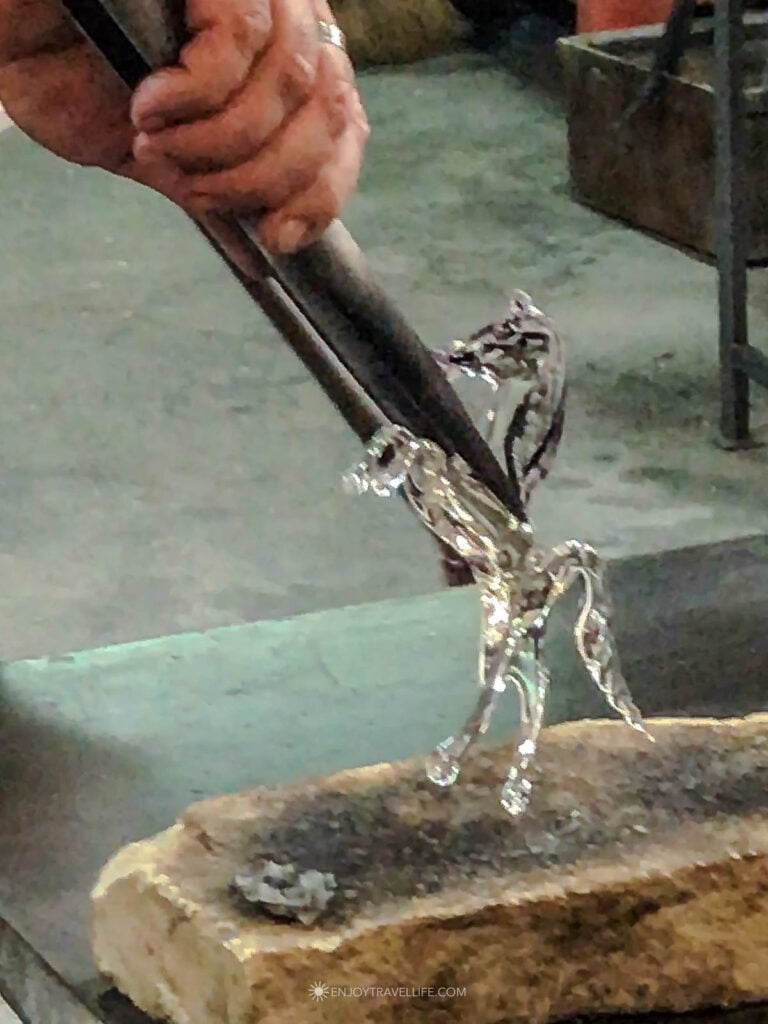
A master artisan pulls molten glass from a furnace that glows orange. You can feel the heat from ten feet away.
Within minutes, he shapes it into a multicolored vase or figurine on the end of a blowpipe. This is worth watching.
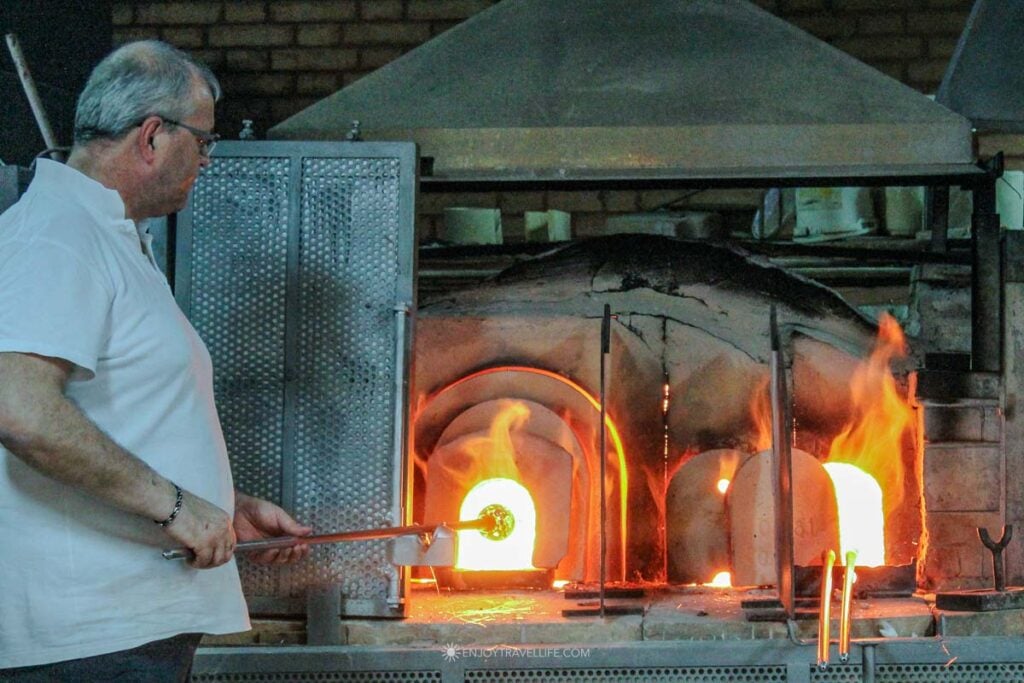
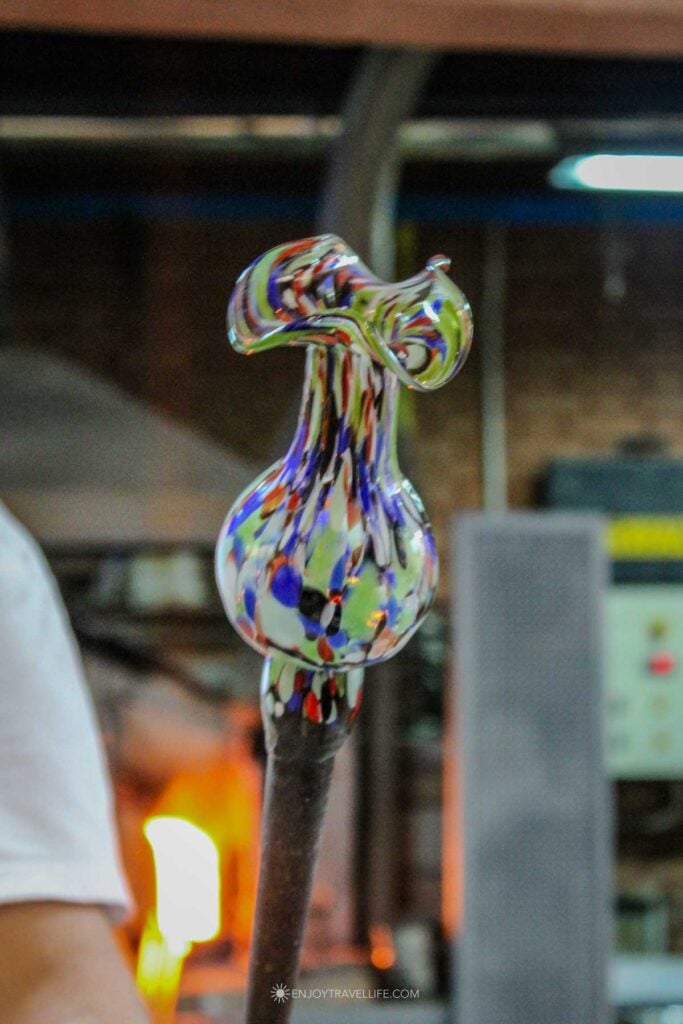
In the glassblowing demonstration, an artisan pulls molten glass from a furnace hot enough to feel across the room, then shapes it into a finished piece in minutes.
But here is the practical takeaway: the items for sale in the first showroom are pricey. If you’re looking for a bargain, you’ll find dozens of glass shops in Murano at every price point. Once you walk past the factory and explore the island on your own, you’ll find better deals and more variety.
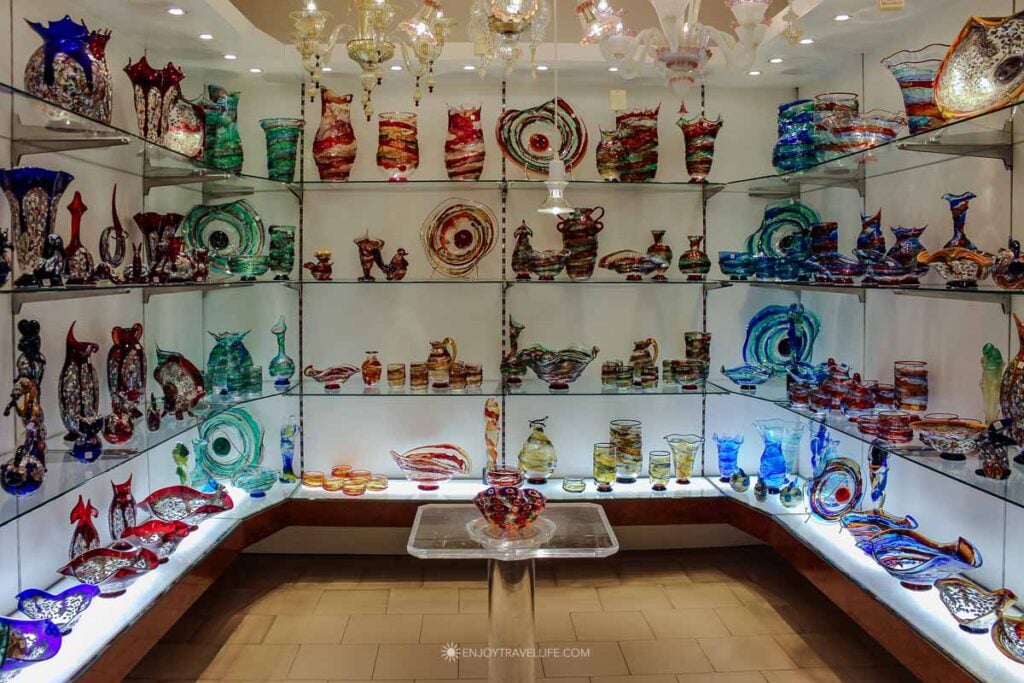
What to Buy in Murano (and What Makes a Good Gift)
If you’re looking for souvenirs or gifts, Murano glass is one of the best things to bring home from Italy. The quality ranges from tourist trinkets to genuine art pieces, so it helps to know what to look for.
Here are some ideas by recipient and budget.
| Gift Idea | Good For | Price Range |
|---|---|---|
| Millefiori necklace | Friends, coworkers, yourself | €15–€50 (~$17–$57) |
| Glass pen (stylo) for ink | Artists, calligraphers, writers | €20–€60 (~$23–$68) |
| Bottle topper (stainless + glass) | Wine lovers, hostess gifts | €15–€40 (~$17–$46) |
| Small glass animal figurine | Older children, collectors | €10–€30 (~$11–$34) |
| Millefiori vase or bowl | Statement piece, home decor | €80–€300+ (~$91–$341+) |
I came home with millefiori necklaces (which pack flat and make easy gifts), a glass pen for my son who is an artist, and a millefiori bottle topper in stainless steel for my daughter.
The small glass animals are tempting for younger children, but remember: it’s glass. Save those for kids old enough to handle them carefully.
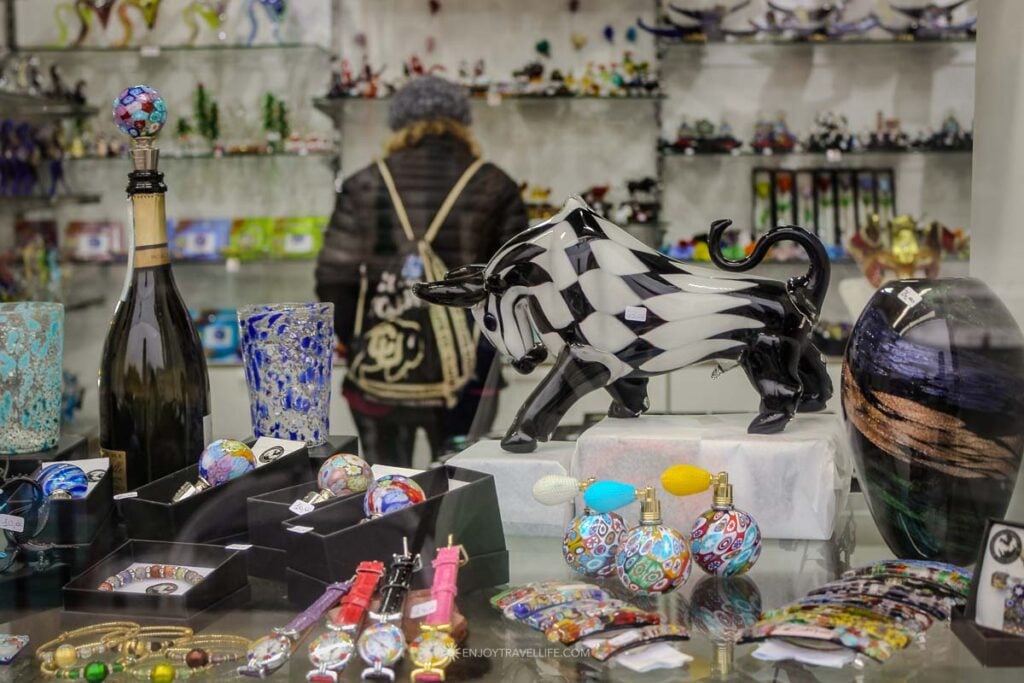
Murano glass runs the full range, from inexpensive trinkets you can buy by the handful to finely crafted pieces worth a closer look. You don’t have to buy from the first showroom.
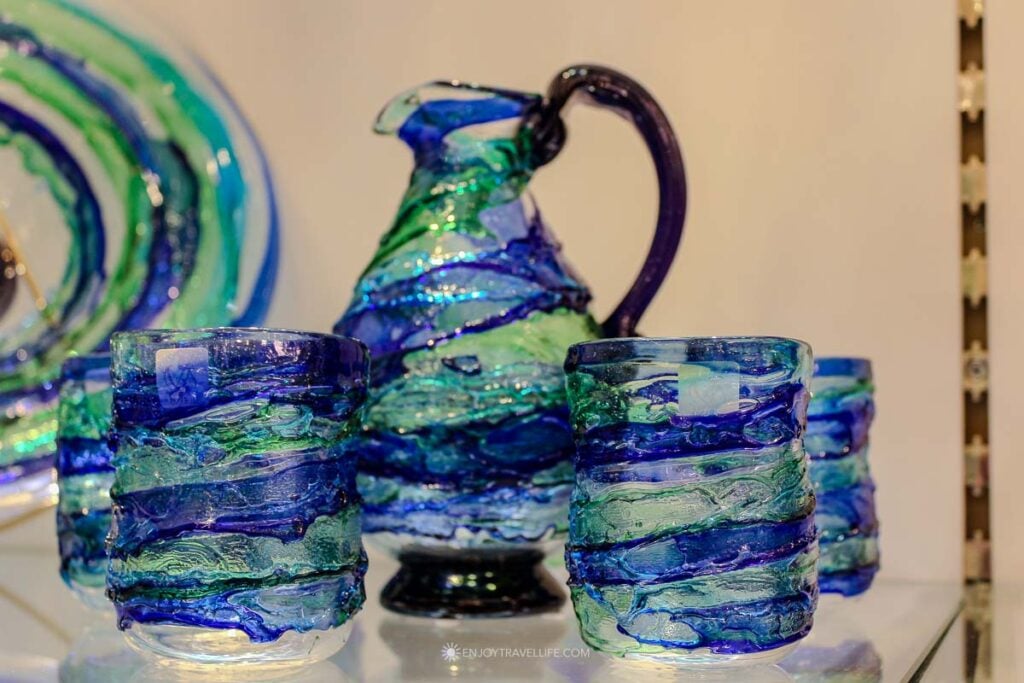
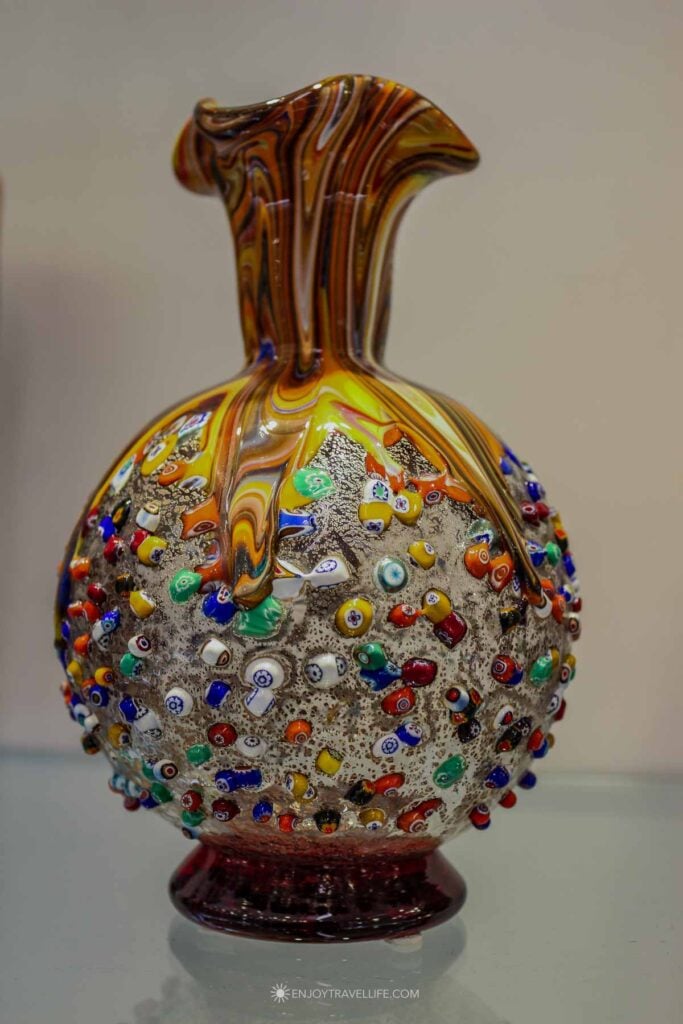
Look for the “Vetro Artistico Murano” trademark sticker. It certifies that a piece was actually made on Murano by a registered artisan, not mass-produced elsewhere. Not every shop carries certified pieces, but the sticker is your guarantee of authenticity.
What to Do on Murano with More Time
The glass demo and the shopping are what most visitors to Murano come for, and on a rushed day that may be all you get.
But Murano is a real island with its own canals, churches, and residential neighborhoods that deserve more than a walk-through on the way to the gift shop.
Here’s what to plan for if you have a full morning.
- Visit the Museo del Vetro (Glass Museum). Over 4,000 pieces trace Venetian glassmaking from the 15th century to the present. Typically open daily (10 AM to 5 PM in winter), admission €10 (~$11). A combined ticket covers the Glass Museum, the Burano Lace Museum, and the Torcello Museum and is worth it if you are visiting all three islands.
- Walk to the Faro di Murano (Murano Lighthouse). This is one of the few lighthouses in the Venetian Lagoon, at the far end of the island. It makes a good landmark to orient yourself, and the walk takes you through the quieter residential side of Murano where the tourist shops thin out.
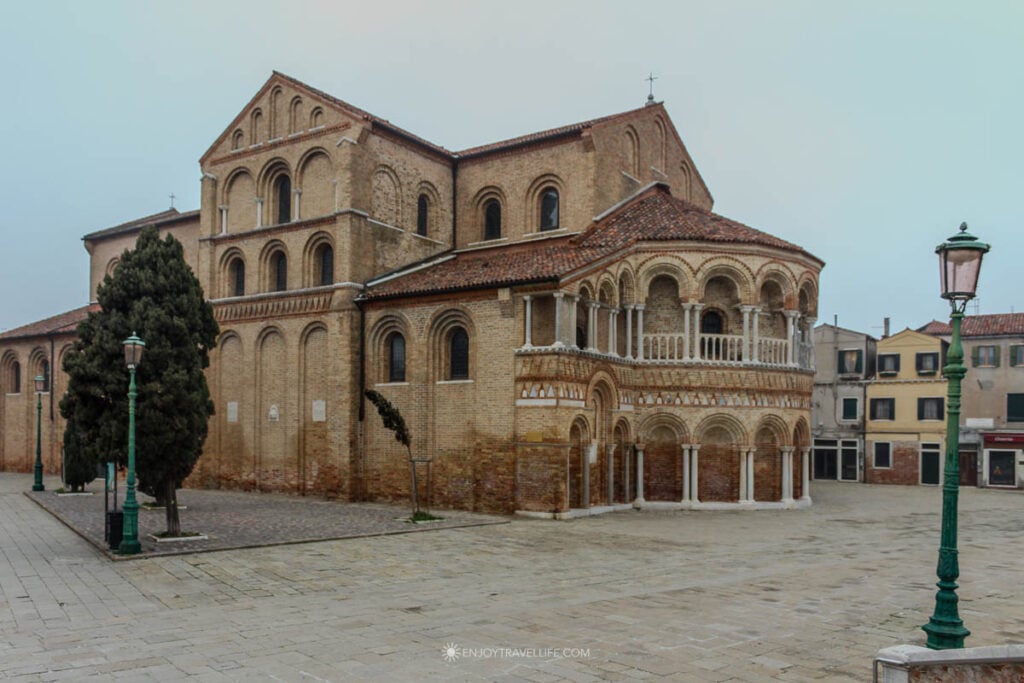
- Visit the Basilica dei Santi Maria e Donato. This 12th-century church with a stunning Byzantine mosaic floor has a legend about dragon bones hanging behind the altar. It’s one of the oldest structures in the lagoon and is rarely crowded.
- Eat at Busa alla Torre. This Murano institution in a sunlit piazza is known for fresh seafood and a mostly local crowd. Arrive before noon for lunch to avoid the wait.
- Try La Perla Ai Bisatei. Just a short walk from the main canal in a residential neighborhood, you’ll find reasonably priced Venetian seafood here, with fewer tourists than the waterfront spots.
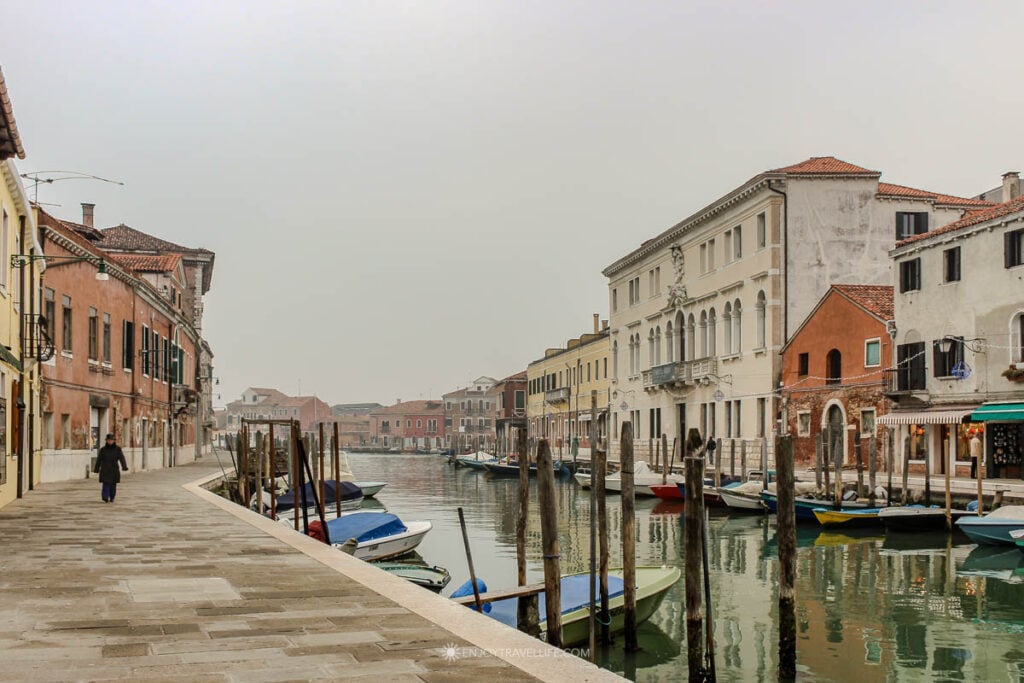
- Explore the back canals. Away from the main glass shopping street, Murano has quiet canals, weathered facades, and moored fishing boats. The residential side of the island feels nothing like the tourist funnel near the ferry dock.
Burano: The Colorful Houses (and My Biggest Mistake)
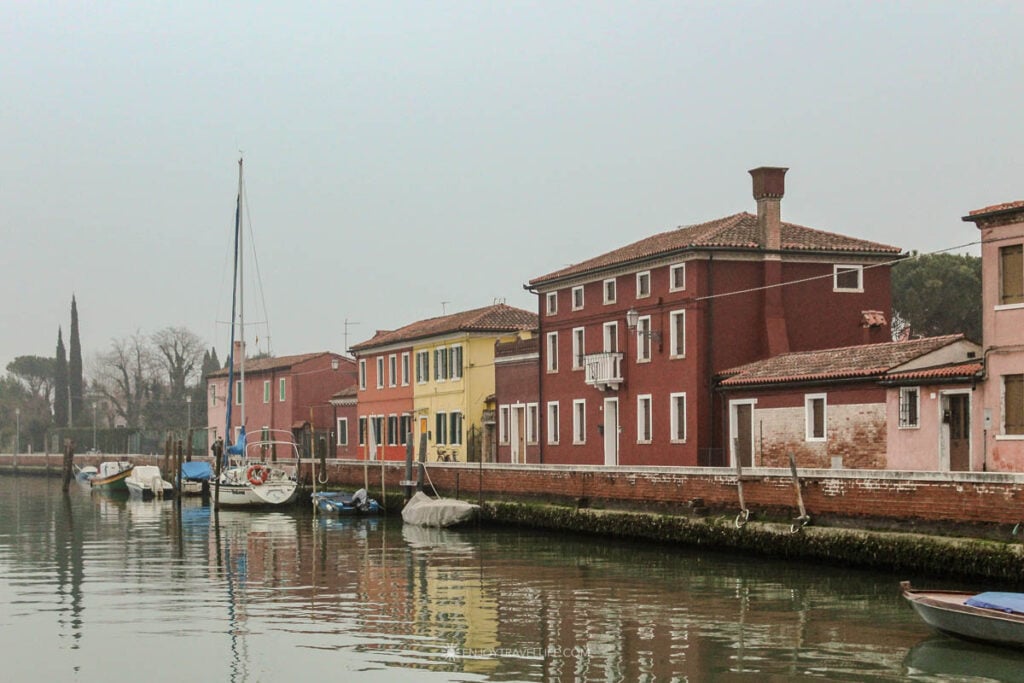
As you approach Burano, you’ll see what everyone comes for: the brightly painted houses lining narrow canals, the leaning bell tower of San Martino, the lace-making tradition that dates back centuries. It’s easy to understand why photographers love it.
On a gray February day, the colors are still vivid against the overcast sky, and the lack of summer crowds means you can actually stop and get a good shot.
Except I could not linger, because I made a beginner mistake.
The Timing Mistake (Learn from Mine)
As a seasoned traveler, this mistake is embarrassing: I didn’t check how long the vaporetto ride from Murano to Burano actually takes.
The answer is about 30 minutes each way.
By the time we arrived in Burano, factoring in our late start from the taxi strike and the time we spent in Murano, we had barely enough time to snap two or three photos of the colored houses before catching the next ferry back to Venice.
I never saw the lace makers.
I never sat at a waterfront cafe.
I never walked more than two streets deep.
I stepped off the ferry, took about 10 steps on the island, turned around and caught the same ferry back.
If this sounds like a cautionary tale, that is because it is one. Check the ferry schedule to Burano before you leave Murano. Map out your return time from Burano, and work backward.
You’ll want to give yourself at least 90 minutes on this island, more if you want to eat.
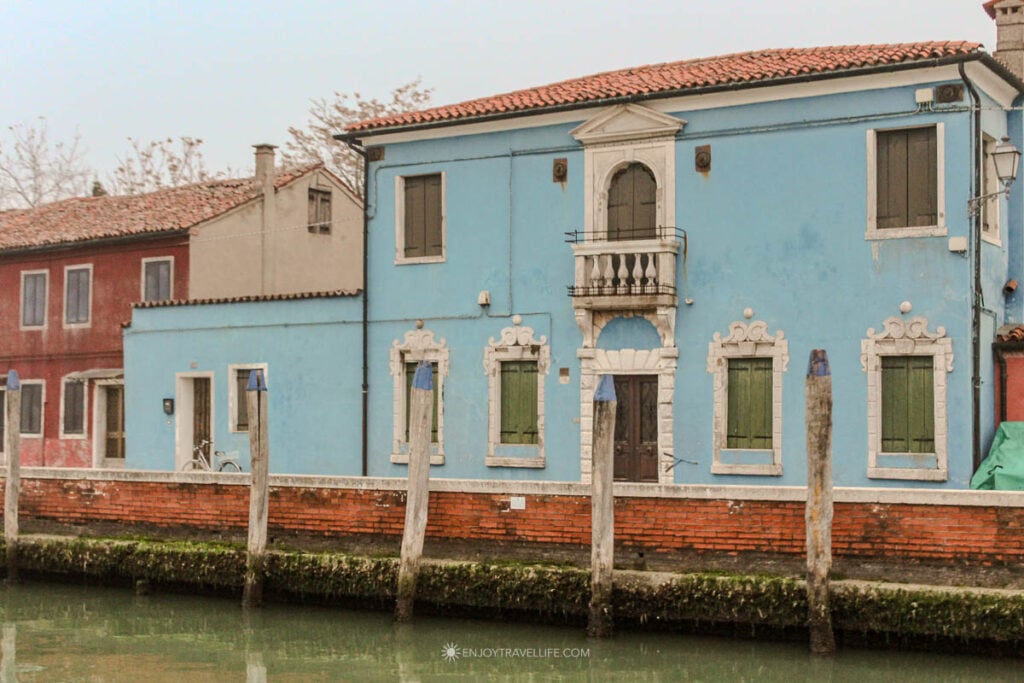
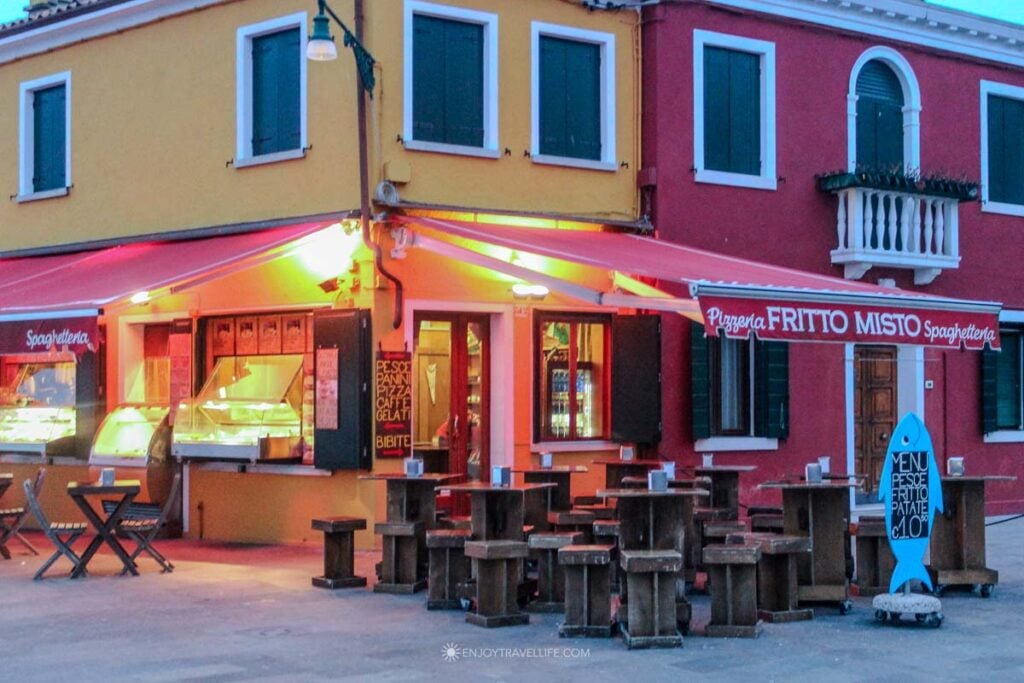
In just a few steps, Burano shifts from a quiet residential canal to a lively cafe corner. The architecture deserves an hour, not the five minutes you’ll have if you’re rushing back to the ferry.
What I Would Do Differently
If I could do this trip again, I would spend a full day on the islands: Half a day on Murano, half on Burano.
Most people recommend spending more time on Murano. After visiting both, I’d do the opposite. Burano is where you want to linger, especially if you are a photographer.
Here is my revised timing plan for anyone planning a similar trip.
| Time | Activity | Island |
|---|---|---|
| 9:00 AM | Vaporetto from Fondamente Nove | Depart Venice |
| 9:15 AM | Arrive Murano. Glass demo, explore shops | Murano |
| 9:15–12:00 PM | Glass Museum, explore canals, lunch | Murano |
| 12:30 PM | Vaporetto to Burano | Transit |
| 1:00 PM | Arrive Burano. Explore, photograph, shop | Burano |
| 1:00–4:00 PM | Lace Museum, waterfront cafe, wander | Burano |
| 4:30 PM | Vaporetto back to Venice | Return |
| 5:15 PM | Arrive Fondamente Nove | Venice |
What to Do on Burano with More Time
Since I barely had time to step off the ferry, here is what I wish I had done in Burano and what you should plan for if you have the time.
- Visit the Lace Museum (Museo del Merletto). It’s open 10 AM to 4 PM (closed Mondays), and admission €5.50 (~$6). You’ll see over 200 specimens tracing Burano lace from the 1500s to the 1900s. The tradition nearly died out in the 19th century before being revived by a school on the island.
- Watch the lace makers at work. A few artisans still practice traditional needle lace (punto in aria) in small workshops around the island. Ask at the museum for directions.
- Eat at Trattoria Da Romano. This four-generation family restaurant established in 1920 originally served returning fishermen. The risotto di gò (goby fish risotto) is a Burano signature dish you won’t find easily elsewhere.
- Try the bussolai buranei, Burano’s traditional butter cookies, which are ring-shaped and lightly sweet. Most bakeries on the main street sell them fresh.
- Walk past the tourist streets. Two blocks off the main canal, the painted houses are still vivid but the shops give way to clotheslines, bicycles, and actual residents.
- Cross the wooden bridge to Mazzorbo. This neighboring island is connected by a footbridge and home to Venissa, a restaurant with its own vineyard. Even if you don’t eat there, the walk through its walled garden is peaceful.
A Note on Carnival Timing

I visited Murano and Burano in February, which fell during Venice Carnival. If your day trip coincides with Carnival (typically late January through mid-February), you’ll need to plan for a few wrinkles.
Vaporetto lines will be more crowded, especially in the afternoon when day-trippers return to Venice for the evening festivities. Ferries may also run slightly behind schedule.
I pre-booked our train tickets from Florence to Venice because finding seats during the festival was a worry, and that turned out to be a blessing and a curse.
Because of a taxi strike, we missed our scheduled morning train and lost the fare, but we were lucky the next train wasn’t sold out. Then we had to rush back to catch the return train, clipping our visit short.
The upside of a Carnival visit is that you get two experiences in one day: the quiet artisan world of the islands in the morning and afternoon, and the spectacle of masked costumes and street performers in St. Mark’s Square when you return.
Venice Carnival dates shift from year to year but usually fall across late January and February. If your trip overlaps with Carnival, book accommodations early and buy your vaporetto pass in advance.
You can see more of that side of the trip in 24 Hours in Venice During Carnevale.
The Morning That Almost Derailed Everything
The reason our day was cut short had nothing to do with poor planning. A taxi strike shut down Florence that morning. We had no idea it was coming, could not get to the train station by car, and had to walk to Santa Maria Novella with our bags.
We missed our pre-booked morning train. The next one got us to Venice hours later than planned, which compressed everything: less time in Venice, less time on Murano, and almost no time on Burano.
The practical lesson: strikes are not uncommon in Italy, especially in larger cities.
Before a travel day, always check the news or ask your hotel concierge about planned labor actions. Having a backup plan for airport and station transfers can save your itinerary.
Download the Trenitalia app before your trip. If your train is cancelled or delayed due to a strike, you can rebook directly on your phone. During partial strikes (sciopero), some trains still run on a guaranteed minimum service schedule.
A Safety Note: The Bracelet Scam
On the train back to Florence that evening, a man approached us and offered bracelets as a ‘gift.’ I accepted, not wanting to be rude. Then he asked for money. When we tried to return the bracelets, the interaction turned uncomfortable and slightly aggressive.
This is a common tourist scam across Europe, particularly in Italian train stations, tourist squares, and on trains. Someone offers you a bracelet, a flower, or a small item as a supposed gift. Once you accept it, they demand payment.
The safest response is to decline from the start. A firm ‘no, grazie‘ and avoiding eye contact usually works. If someone places a bracelet on your wrist uninvited, take it off immediately and hand it back. Do not engage further.
7 Tips for Visiting Murano and Burano
You’ll get far more out of both islands when you plan it right. These seven tips cover the timing, tickets, and small choices that make the day smooth instead of stressful.
1. Buy the 24-hour vaporetto pass. At €25 (~$28) it covers unlimited rides. A round trip to both islands would cost €38 (~$43) in single tickets. The pass pays for itself immediately.
2. Start with Murano in the morning. Glass workshops are most active in the morning, and starting on Murano gives you a natural route to Burano via Line 12 without doubling back to Venice.
3. Don’t buy glass at the first shop. The factory you’re funneled through off the ferry has the highest prices. Walk deeper into the island where smaller shops offer better variety and better deals.
4. Dress warmly for the ferry. The vaporetto has a covered cabin, but you will want to stand outside for the views. In winter, the lagoon wind is biting. Bring a hat, scarf, and gloves.
5. Check the ferry schedule before leaving Murano. Line 12 to Burano runs every 20 to 30 minutes. If you miss one, you lose 30 minutes of island time. Plan your Murano exit around the schedule.
6. Give yourself at least 90 minutes on Burano. An hour feels rushed. Factor in 30 minutes of transit each way and plan accordingly. If you can only do one island properly, choose Burano for photography and Murano for shopping.
7. Look for the Vetro Artistico Murano trademark. This official sticker certifies that a piece was made on Murano by a registered artisan. It is your best protection against mass-produced imitations.
Short on time? A guided Murano and Burano tour from Venice includes the boat transport and handles the island timing for you, so you will not need a separate vaporetto pass.
Final Thoughts on Visiting Murano and Burano from Venice
The islands of Murano and Burano are easy to reach from Venice, but they deserve more than a quick stop between attractions. Give yourself time to watch a glassblower at work in Murano, wander Burano’s colorful canals, and linger over lunch instead of racing for the next ferry.
If there’s one lesson I took away from this trip, it’s that the train and ferry schedule shape your day more than anything else. Plan around them, buy the 24-hour vaporetto pass, and resist the urge to cram too much into a few hours.
Do that, and you’ll come home remembering the craftsmanship, the colors, and the quiet corners of the Venetian Lagoon instead of wishing you’d had more time.
FAQs
How long does it take to get from Venice to Murano?
About 10 minutes by vaporetto from the Fondamente Nove stop. Lines 3, 4.1, and 4.2 all serve Murano. Ferries run every 10 to 20 minutes.
Can you visit Murano and Burano in one day?
Yes, but give yourself the full day. A rushed half-day leaves little time on Burano, especially once you factor in ferry transit (30 minutes between islands). Plan for at least 2 to 3 hours on Murano and 90 minutes to 2 hours on Burano.
Is the Murano glass factory tour free?
Most glass factories offer free demonstrations because they hope you will purchase something in their showroom afterward. You’re under no obligation to buy. The Museo del Vetro (Glass Museum) charges €10 (~$11) for adult admission.
Is Burano worth visiting in winter?
Yes. The colorful houses are vivid regardless of season, and winter means fewer crowds for photography. Some restaurants may have reduced hours, so plan to eat lunch rather than dinner. The Lace Museum is open year-round except Mondays.
What is the best way to get from Murano to Burano?
Take vaporetto Line 12 from Murano Faro to Burano. The ride takes about 30 minutes and runs every 20 to 30 minutes. Check the schedule at the dock or on the ACTV website before you leave Murano.

Next Steps
For more on exploring Italy, read these articles next: